Burlingame period homes
Custom Kitchen Cabinets in Burlingame, CA
Custom kitchen cabinets in Burlingame are usually commissioned by owners of houses raised between the wars, and the brief hardly ever changes: a room that cooks like a kitchen designed this decade while still belonging to a Spanish Revival or Tudor house close to a century old. Our shop draws and builds to the room as measured, so the casework follows walls that have moved and the storage inside suits how a household shops now.
Below: what a house of this age offers a cabinetmaker, which details earn their keep, how storage hides behind period fronts, and how the build runs.
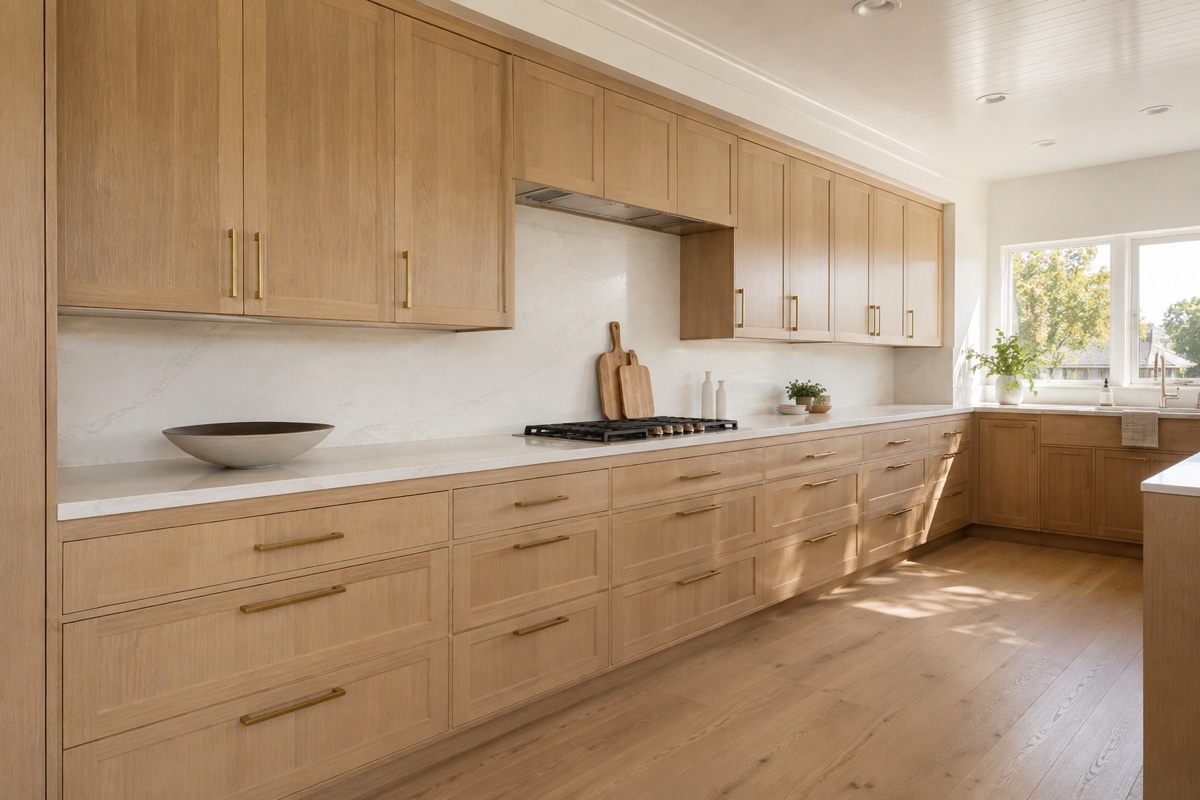
What a Prewar Burlingame Kitchen Hands the Cabinetmaker
A kitchen drawn in 1926 was a work room at the back of the plan: a range, a sink under the window, one tall cupboard. A century of settling moved the rest, and three conditions recur.
Walls wander, and floors go with them. Half an inch of lean is ordinary at this age, so backs and end panels get cut to the wall contour while the toe kick takes up the floor.
Ceilings are tall. Nine feet flatters full-height cabinetry but puts the top shelf beyond reach, so daily things belong low.
Openings are fixed. Window, arched passage, chimney breast and back door were placed for a routine nobody follows now, and moving them is structural work. Drawing around them instead is the argument for custom kitchen cabinets rather than modular boxes.
Deciding Which Period Details Are Worth Saving
Not everything old here deserves to stay, and not all of what should stay looks valuable. Three questions sort it during the measure.
Is the material better than its replacement? Doors and casings from the twenties were milled from slow-grown softwood with a tight figure current stock rarely equals, and a sound one is worth stripping and rehanging.
Is it in the way? A shallow cupboard occupying the only wall a modern refrigerator fits against is a losing argument, and the cupboard is what moves.
Would copying beat repairing? A dresser under six coats of enamel, its profiles gone soft, can take more hours to strip than a fresh one takes to build, so the original section gets templated instead.
Old latches and butt hinges clean up and replate, which ties new doors to the house. Where the boxes are square and the plan still suits you, cabinet refacing changes only what shows.
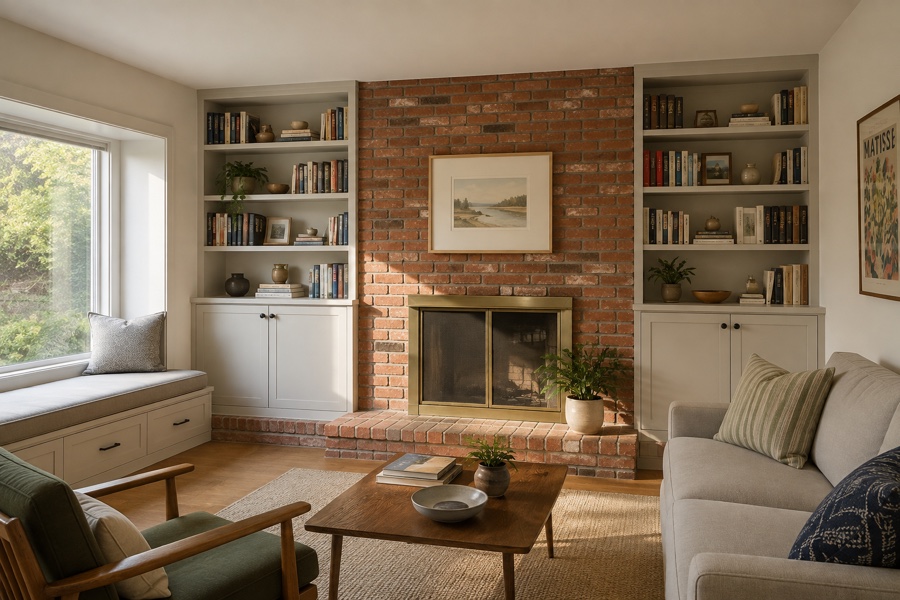
Modernizing Storage Without Erasing the Character
Most owners want period outside and current inside. That works, because what reads as old is the fronts, the proportions and the finish, while what makes a kitchen work is hidden.
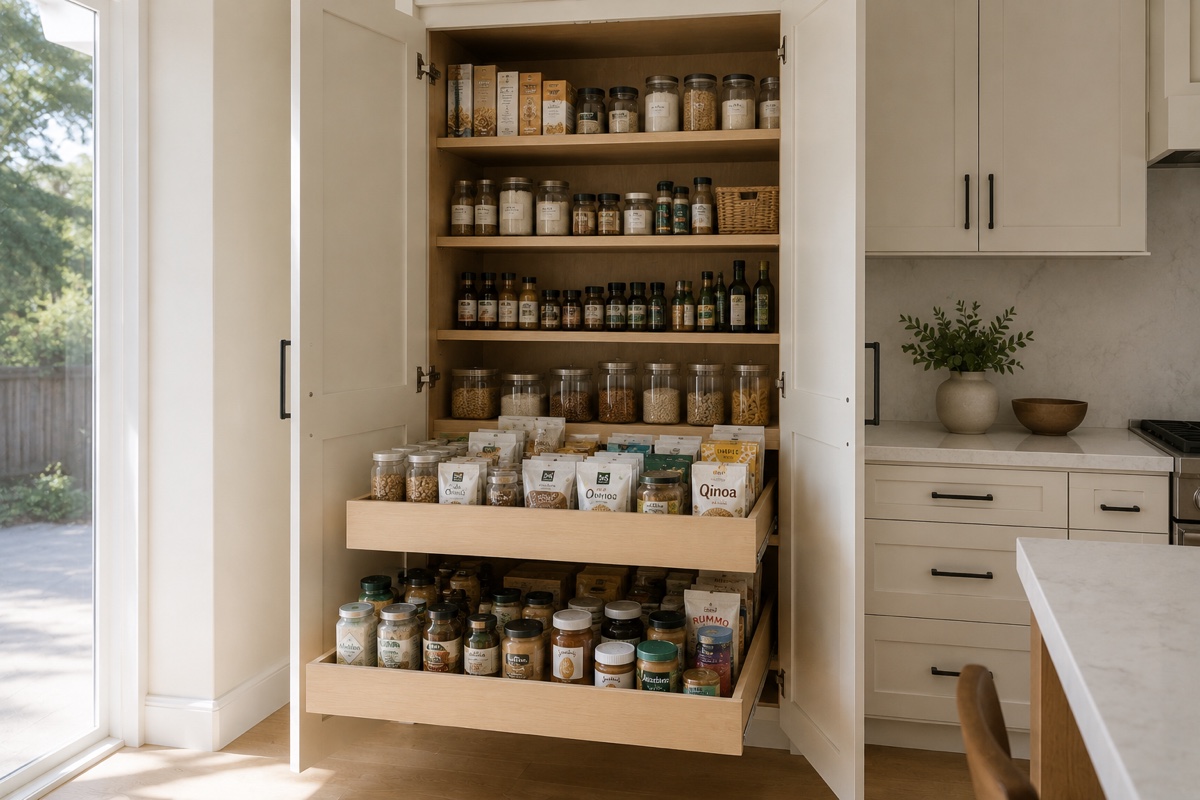
A handful of moves do most of it. Plates come down out of the uppers into deep drawers, the change households notice first. A slim pull-out beside the range holds bottles that otherwise disappear behind one another. The dead corner takes a carousel, waste rides behind a matching door, and the dishwasher receives a panel.
A service porch absorbed into the kitchen generations ago is often the best pantry site in the house.
None of that shows from the doorway, and all of it is quoted piece by piece rather than by the foot. The pricing guide for custom cabinetry lays out how each choice moves a total.
How a Period Kitchen Build Runs, Measure to Install
The sequence gains a step at the front and slows at the end. First comes a visit that records the room wall by wall, notes where it leans, and templates the profiles worth reproducing. Elevations follow, and nothing gets cut until you approve them.
Shop time then runs roughly six to ten weeks from that approval, and your kitchen keeps working through nearly all of it. Building away from the house matters more in a plaster one: dust and sprayed finish stay out of rooms you occupy.
Fitting asks for patience. Backing goes in where the framing offers nothing to fasten to, boxes are set to the level line and cut to the wall contour one at a time, and doors take a second adjustment weeks later, once solid stock has settled.
Burlingame is a short drive from the shop, so a check partway through is easy to arrange. Our Burlingame service area page covers street access, parking and scheduling.
Frequently Asked Questions
Can new cabinets be made to match the style of a 1920s house?
Yes, within one limit. A period match is mostly proportion and fit rather than ornament: stile width, the depth of a panel below its rail, the reveal around a door, and the shape of a pull place a kitchen in its decade more reliably than applied moulding does. Those are measurable, so take the numbers off joinery surviving elsewhere in your own house. Material is the limit. Vertical-grain fir of the sort those doors were milled from is scarce now, so a matched front is usually paint-grade poplar.
What surprises come out of plaster walls and old framing during a kitchen remodel?
Enough of them that an honest plan reserves time for the unknown. The usual list: framing with nothing solid to fix a wall cabinet to, since studs of this vintage sit at irregular spacing; wiring older than grounded circuits, which an electrician should see before anything is closed up; an abandoned flue sitting where a tall cabinet was drawn; and wall thickness that shifts across a run because the plaster was floated by hand. Paint on trim of this era may contain lead, so testing belongs before sanding. Opening one small area on purpose, while drawings are in progress, shrinks the surprise.
Does replacing kitchen cabinets in Burlingame need a permit?
Treat that as a question for the city rather than for a cabinet shop, and settle it before work is booked. The broad pattern in California towns is that cabinetry exchanged in place, with nothing moved in plumbing, wiring or structure, tends to be handled as cosmetic work, while relocating a sink, adding circuits or removing part of a wall is normally permitted. Older neighborhoods add a layer, since some properties fall under design review. Rules like those get applied case by case, so the dependable step is a call to the City of Burlingame building division with drawings in hand.
Keep reading: cabinet pricing, built-in cabinets, or arrange a measure.
Plan a Burlingame period kitchen
Free in-home consultation and a written quote. No pressure, no obligation.