Color guide
Choosing a Kitchen Cabinet Color Scheme
This guide is for homeowners choosing cabinet colors for a kitchen in San Mateo or anywhere on the Peninsula, whether the cabinets are new or getting refinished. Color is the decision people agonize over longest and can test most cheaply, and the goal here is simple: a scheme you still like in year eight, chosen in your own light rather than a showroom's.
Light Decides More Than Taste Does
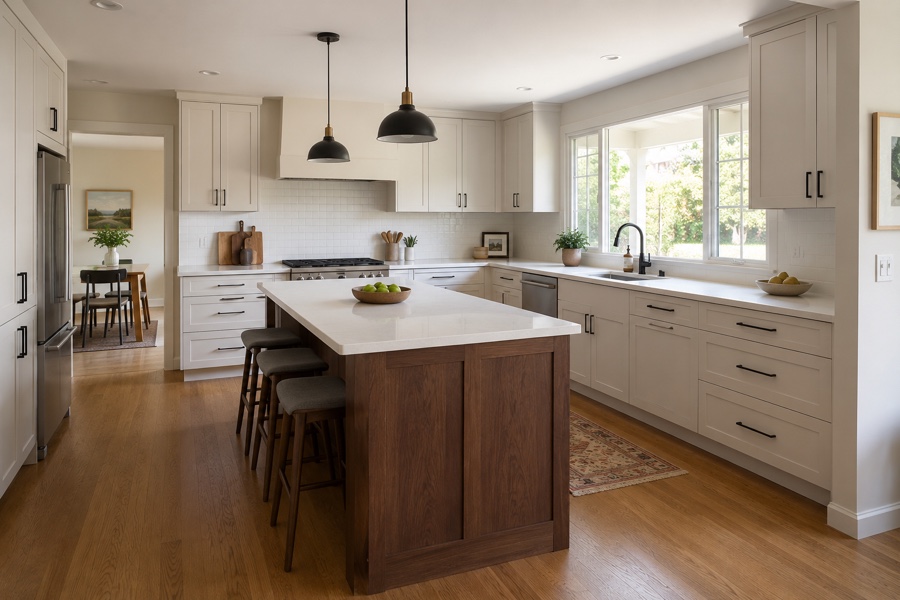
The same door sample changes character three times a day. Morning sun warms it, overcast afternoons flatten it, and warm evening bulbs push everything toward yellow. Peninsula kitchens add their own variable: many face mature trees or neighboring houses, so the light arrives filtered and green-tinted even at noon. This is why a color chosen from a small chip under store lighting so often disappoints. Get large samples, prop them against the wall the cabinets will occupy, and look at them at breakfast, mid-afternoon, and after dark before committing to anything.
Two-Tone Schemes: The Island Carries the Risk
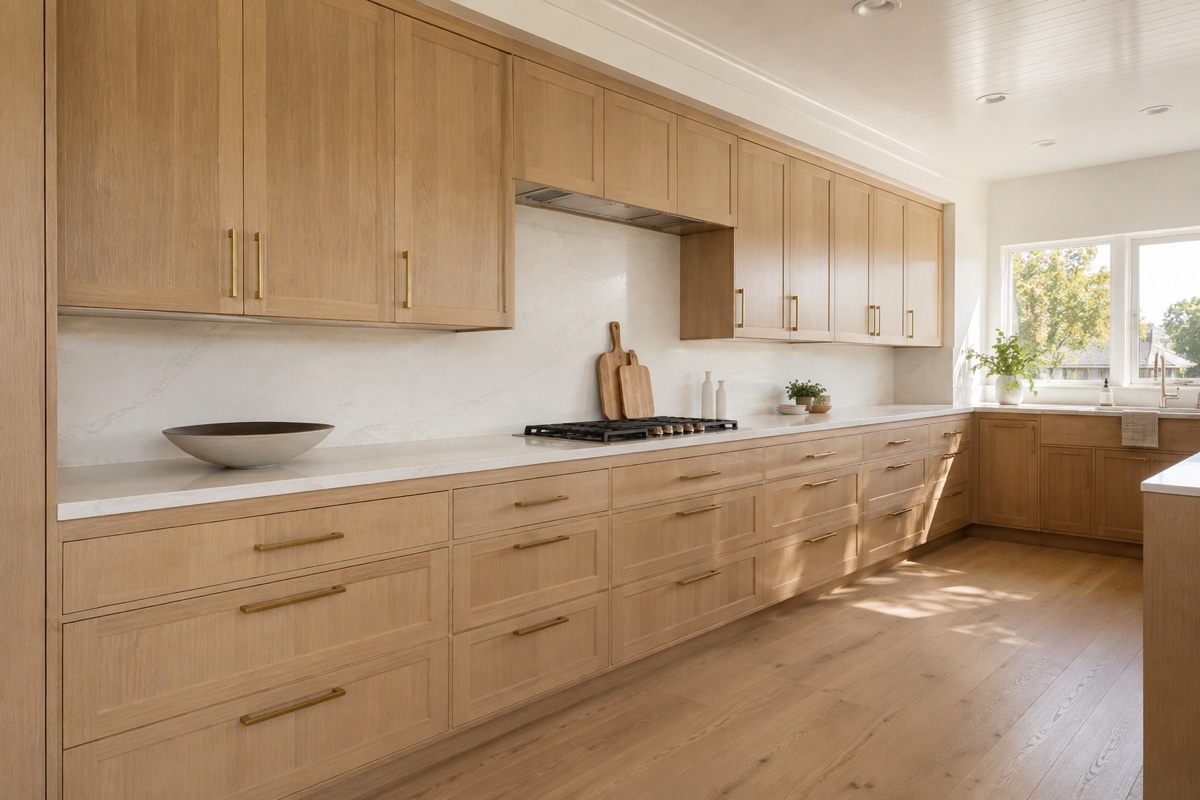
The most durable two-tone formula keeps the perimeter quiet and lets one element speak. A cream or soft white run around the walls with a walnut or deep green island gives the room a center of gravity without painting yourself into a corner, literally. The island is also the piece easiest to refinish alone if tastes change, which makes it the right home for the bold choice. The reverse scheme, loud perimeter and quiet island, commits the whole room to the risk and is much harder to walk back.
Wood Tone Versus Paint
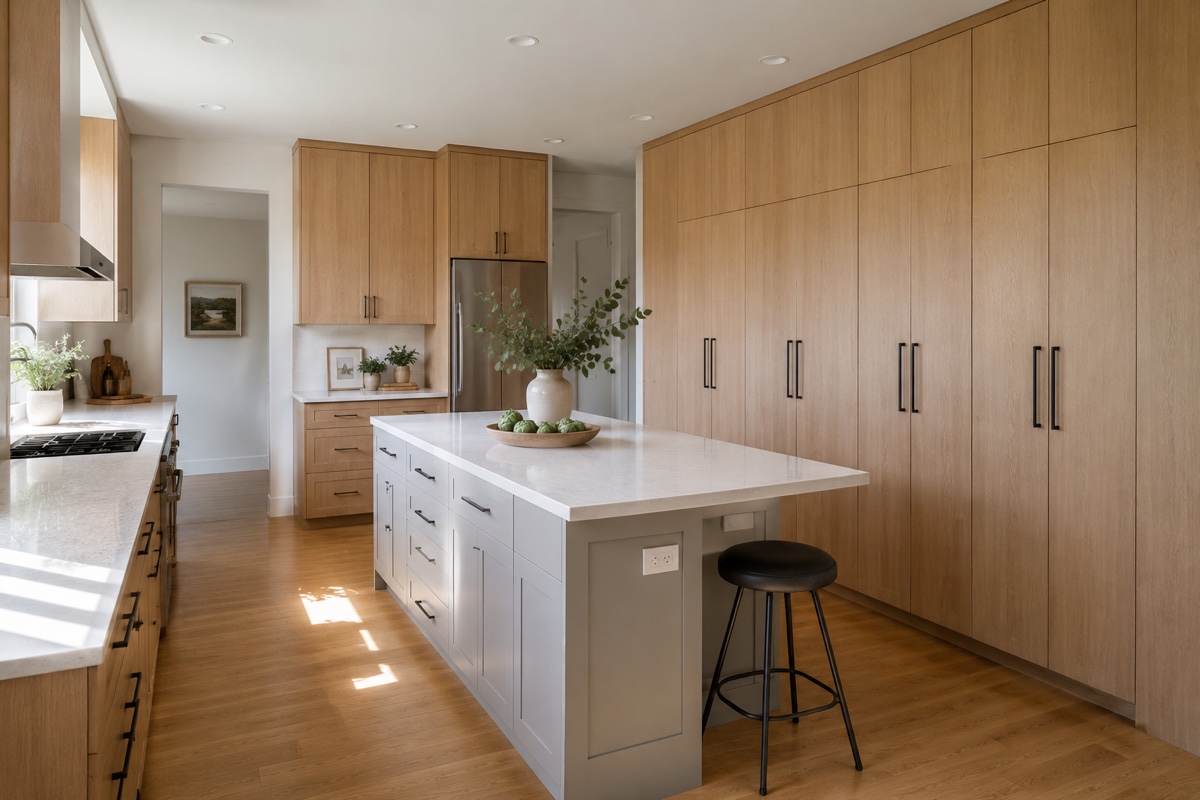
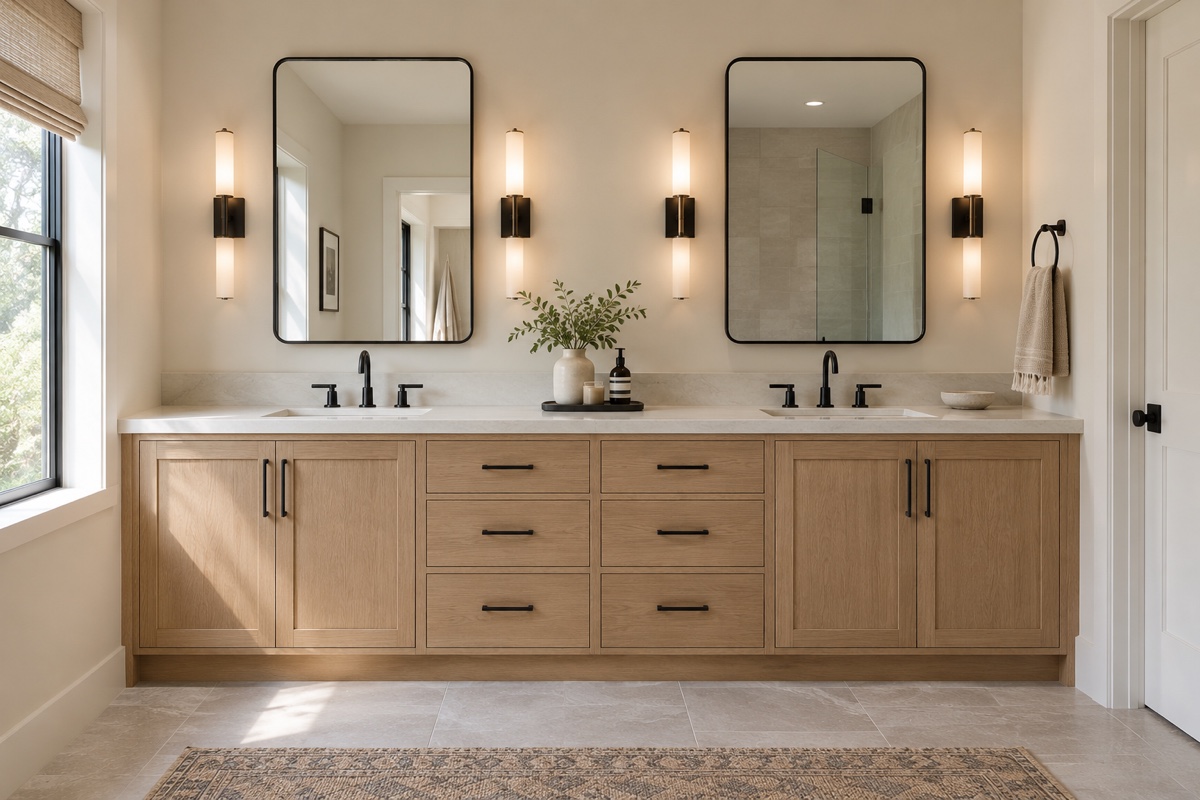
Showing the wood and painting it over are different bets. Natural finishes on oak or walnut bring grain and warmth that paint cannot fake, wear gracefully because scratches blend into figure, and never show a brush line. Paint offers exact color control and a crisp, tailored read, but every chip shows primer and every touch-up is a color match. A practical middle path pairs the two: wood where hands land daily, paint where the eye rests. The same fork runs through bathroom vanities, where water and daily wear raise the stakes for whichever finish wins. Our kitchen cabinet page covers the species we build with and how finish choices interact with them.
If the Boxes Are Good, Change the Color, Not the Kitchen
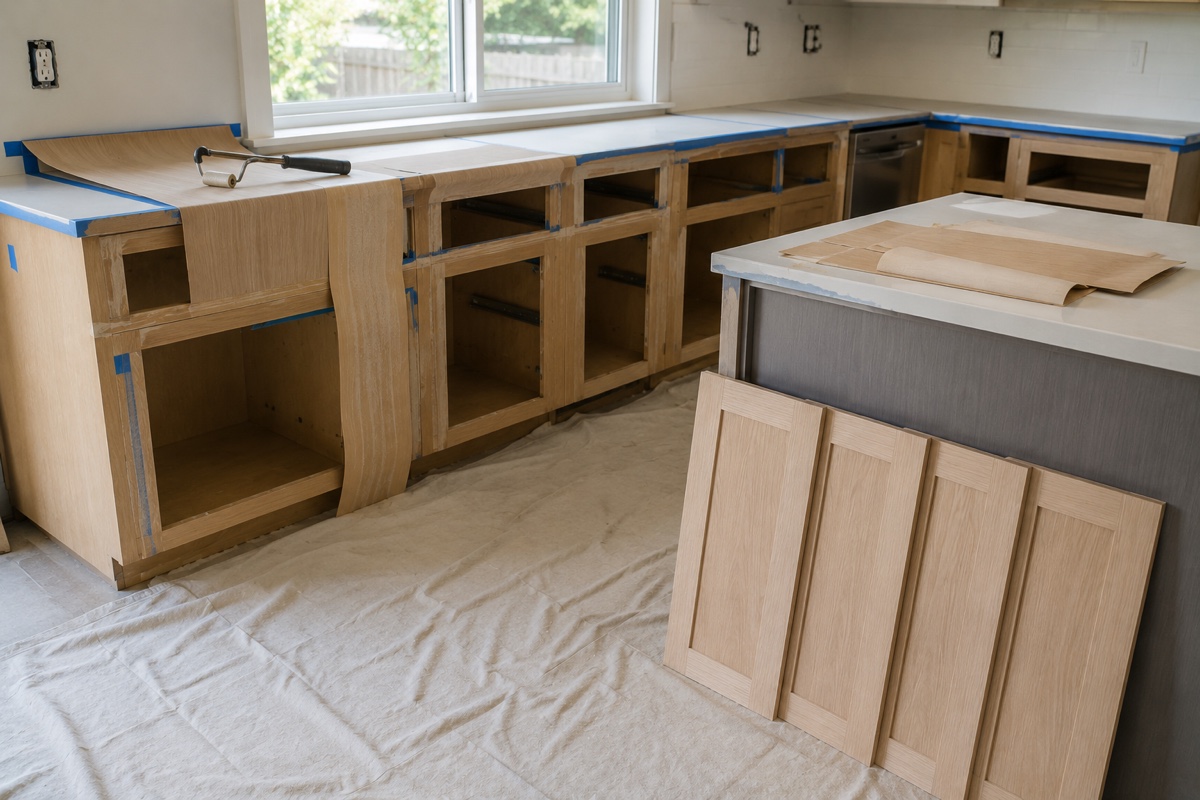
A dated color scheme on sound cabinets is a finishing problem, and finishing problems have finishing solutions. Cabinet refacing replaces the doors and drawer fronts and re-skins the frames, which changes the scheme completely while the boxes, the counters, and the plumbing stay put. It is the route to consider seriously before any conversation about replacement, because it delivers the visual result of a new kitchen at a fraction of the disruption.
Hardware is the last ten percent of any scheme. Brass warms cool colors, black sharpens pale ones, and changing knobs costs an afternoon. Choose it after the color, never before.
Frequently Asked Questions
Are white kitchen cabinets going out of style?
No, and they are unlikely to. White and off-white remain the most chosen cabinet colors because they reflect light, suit almost any counter and floor, and do not date the way stronger colors can. What shifts with fashion is the temperature of the white and what it is paired with. Warm whites over wood tones read current; stark blue-whites read like the last decade. If you are nervous about trends, put the color on the perimeter and take risks on the island, which is the cheapest part to repaint later.
Should upper and lower cabinets be the same color?
They do not have to be, and splitting them is one of the most reliable schemes there is. Darker lowers ground the room and hide scuffs at shoe height, while lighter uppers keep the top half of the kitchen airy and make the ceiling feel higher. The scheme works best when the split is decisive rather than subtle: two shades that are obviously meant to differ, not two that look like a matching error.
Is it cheaper to change cabinet color than to replace cabinets?
Almost always, provided the boxes underneath are sound. A color change is a finishing job, not a construction job, and refacing takes it further by replacing doors and drawer fronts while keeping the cabinet bodies. Replacement only earns its cost when the boxes themselves are failing or the layout is wrong. If the kitchen works and only the look is tired, changing the color is the highest-return version of the project.
Deciding on a scheme for your kitchen?
Free in-home consultation and a written quote. No pressure, no obligation.